The Four Day Trail
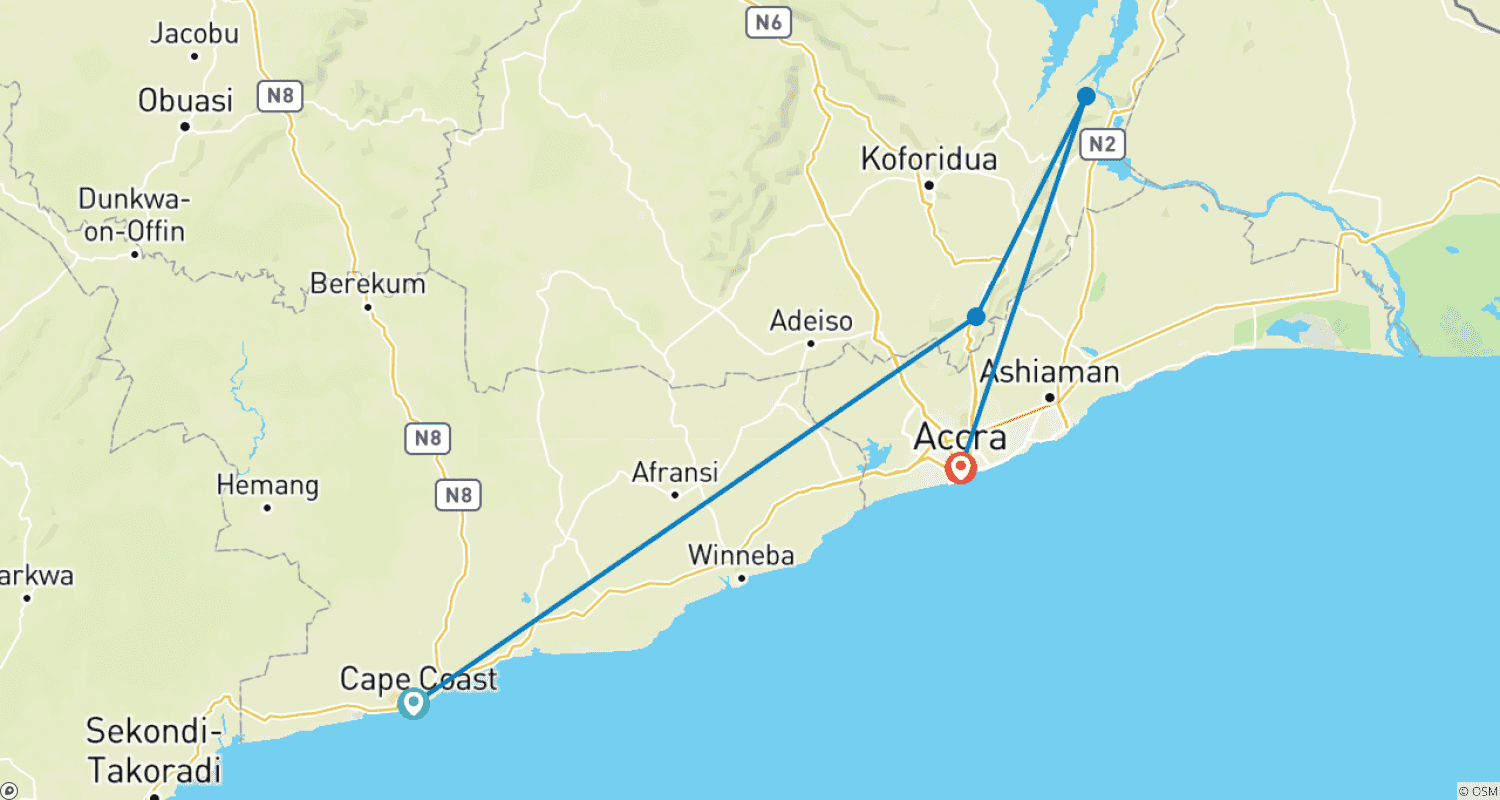
Cape Coast · Aburi · Akosombo · Akra
Przegląd wycieczki
This is a tour that will excite adventure lovers and show them a different side of the country. It will expose travelers to the natural environment and its occupants and most importantly, it will be a very fun trip touring communities and experiencing their culture and beliefs.
Plan dzień po dniu
Kakum National Park
There would be a visit to the Kakum National Park, the second largest national park in Ghana. It is the home for various animals, reptiles and birds that are dominantly nocturnal; active and usually seen at night. There is a 15 minute walk/hike to the canopy walkway, the main attraction of the visit. The walkway was built by 2 Canadians and 6 Ghanaians in 1994, about 40-50 metres high with a distance of about 350 metres. The walkway gives an aerial view of the forest and guest safety is assured as three of the Ghanaians who helped to build the walkway are still with the park and carry out frequent maintenance. This tour is recommended for those who would want to conquer their fear of heights.
Cape Coast Castle
Cape Coast Castle is one of the largest of the castles built by European powers in today Ghana. It began as a trade lodge constructed by the Portuguese in 1555 on a part of the Gold Coast, which later became known as the Cape Coast. The Cape Coast Castle has served as the West African headquarters of the president of the Committee of Merchants; the seat of the British governor; and a school. It is open to the public and is currently a historical museum with Ghanaian arts and crafts gift shop, and it is the The Cape Coast Castle is the smallest and the only castle built for the purpose of slavery by the Europeans in 1652. The Cape Coast Castle as recognised by UNESCO as a World Heritage Site has become an important site in the remembrance of the history of slavery. On the first Pan African Festival celebrations in 1998, remains of 2 slaves from Jamaica and Barbados were exhumed and brought back to Ghana through the door of no return, now the door of return. This was a symbolic welcome to their descendants saying, they are always free to return to their roots where they were taken. The site has contributed to preserving our history as Africans and helped tell the African perspective to slavery.
Overnight Stay in Accra